
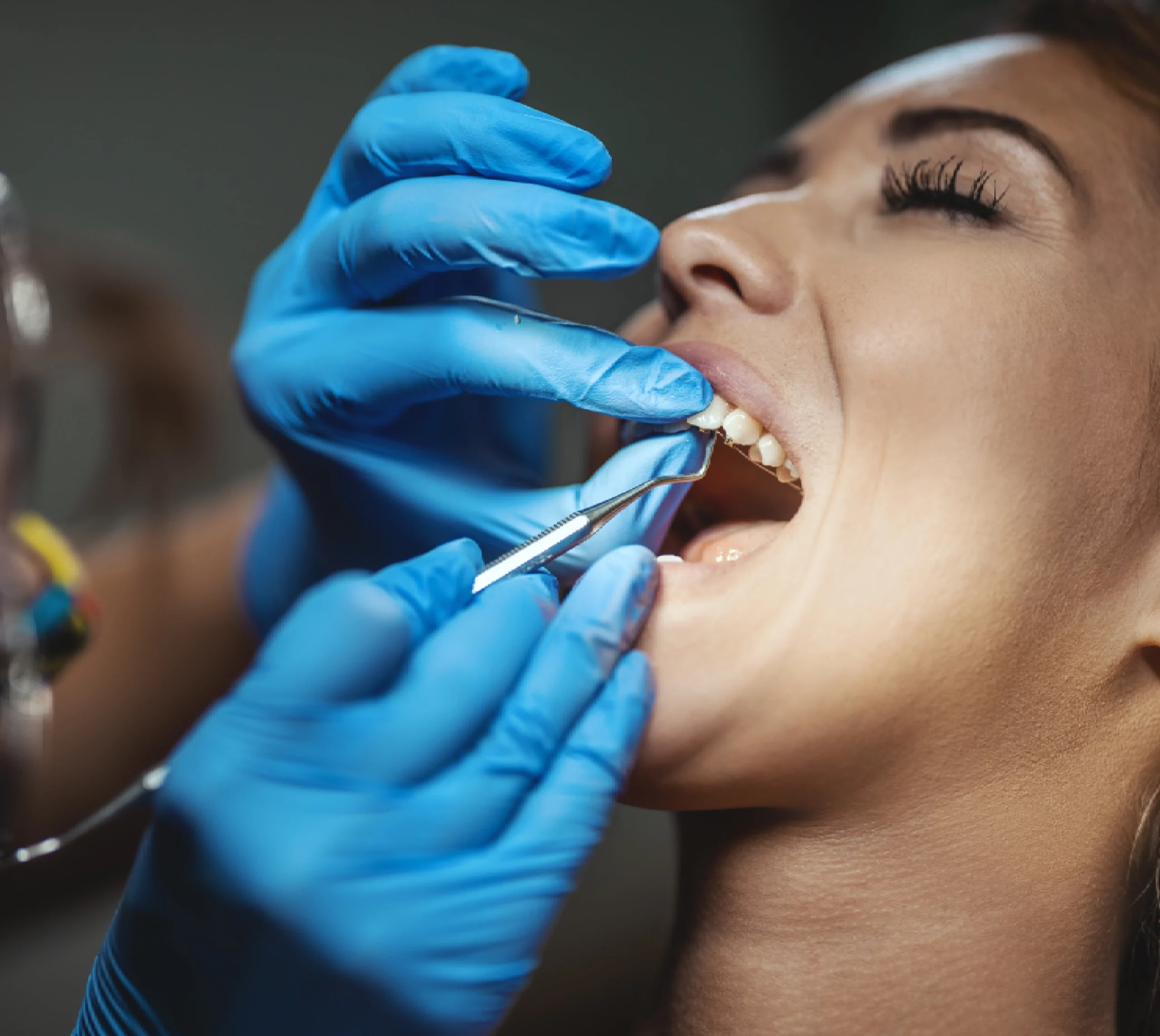
Misaligned teeth can affect more than just your appearance; they can influence your oral health, eating habits, and self-confidence. If you’re not satisfied with your smile, it’s essential to explore your treatment options. Thanks to advancements in dental technology, today’s teeth straightening solutions are faster, more discreet, and highly effective, often delivering results in under a year.
If you’re looking for more information on how to correct misalignment, contact the team at Ammons Dental by Design for a consultation. We specialize in personalized dental care and provide a range of teeth straightening options to suit your needs.
Understanding Misaligned Teeth
Misaligned teeth refer to a variety of issues where your teeth don’t line up correctly when you bite. These misalignments can cause discomfort and even affect your overall oral health. Below are some of the most common types of misalignment problems:
Crossbite
A crossbite occurs when the upper and lower jaws don’t align properly, causing some of your upper teeth to sit inside the lower teeth. This misalignment often results from jaw irregularities and can cause issues like tooth wear, gum disease, and bone loss.
Overbite
An overbite happens when the upper teeth significantly overlap the lower teeth. While minor overbites are common, severe cases can make eating and speaking uncomfortable and, in some cases, painful. Left untreated, overbites can also lead to jaw strain and tooth wear.
Underbite
An underbite is a more severe condition where the lower teeth protrude past the upper teeth, causing aesthetic concerns and difficulties with speaking or chewing. This misalignment is known as prognathism and can affect the overall shape of your face if left untreated.
Crooked Teeth
Crooked teeth vary in severity, but they generally refer to teeth that are misaligned in the mouth. Crooked teeth may cause difficulty when biting and chewing, as well as aesthetic concerns. In many cases, this condition can lead to further misalignments and increased risk for tooth decay if not corrected.
Malocclusion
Malocclusion is a general term for any misalignment of the upper and lower teeth. It includes both crowded teeth and gaps between teeth, often making it difficult to maintain good oral hygiene. Malocclusion may also result in issues with the bite, causing discomfort or difficulty eating.
Gaps and Spacing
Excessive spacing between teeth can cause biting issues and make it harder to clean your teeth properly. Large gaps can also lead to the movement of adjacent teeth, further exacerbating the misalignment.
Crowded Teeth
Crowded teeth occur when there’s insufficient space in the jaw for all the teeth, causing them to overlap. This can be particularly troublesome for patients with underdeveloped jaws. Crowded teeth often make it harder to clean between teeth, increasing the risk for cavities and gum disease.
Open Bite
An open bite occurs when the upper and lower incisors do not meet when you close your mouth. This condition can affect your ability to chew or speak properly and may require orthodontic intervention.
Causes of Misalignment Issues
The reasons behind misaligned teeth can vary from genetic factors to environmental influences. Here are some common causes:
- Genetics: If your parents had crooked teeth, overbites, or underbites, you might inherit similar issues.
- Thumb Sucking: Prolonged thumb sucking after age three can affect the development of the teeth and jaw, causing misalignment.
- Mouth Breathing: Breathing through your mouth instead of your nose can contribute to dental and jaw irregularities.
- Pacifier Use: Extended use of a pacifier beyond the age of three can influence the positioning of teeth.
- Cleft Lip/Palate: This congenital condition can lead to misalignments in the teeth and jaw structure.
- Trauma: Injuries to the mouth or jaw can cause tooth misalignment.
- Poorly Fitting Dental Work: Ill-fitting crowns, bridges, or other dental devices can lead to misalignment over time.
Classifications of Misalignment Issues
Misalignments are classified based on severity and the impact they have on oral function. These classifications help determine the most appropriate treatment plan.
Class I: Mild Malocclusion
Class I malocclusions are the most common and typically involve minor dental issues like an overbite. These misalignments do not usually interfere with basic oral functions like speaking or chewing.
Class II: Moderate Malocclusion
Class II malocclusions, or retrognathism, are more severe than Class I. They often cause noticeable overbites, and patients may experience difficulty eating or speaking. Treatment is generally required to correct the alignment.
Class III: Severe Malocclusion
Class III malocclusions, or prognathism, are the most severe and can cause significant discomfort or pain while eating or speaking. This classification may require surgery in addition to orthodontic treatments to correct the misalignment.
Treatment Options Available
There are several treatment options available for correcting misaligned teeth, ranging from simple braces to more advanced surgical procedures. Your dentist will help you determine the best option based on your unique needs.
Traditional Metal Braces
Traditional metal braces are still one of the most effective methods for correcting significant misalignments. While they are visible, they are highly efficient at moving teeth into the correct positions.
Clear Aligners
Clear aligners, such as Invisalign, are a popular option for those who prefer a more discreet treatment. These custom-made trays gradually shift the teeth into place without the need for metal brackets. However, clear aligners are generally not recommended for severe misalignments.
Veneers
Veneers can be used to address mild misalignments by reshaping the teeth for a more uniform appearance. They are particularly useful for correcting aesthetic concerns but are not a solution for functional issues.
Dental Implants
Dental implants may be required to replace missing teeth that are contributing to misalignment. These are titanium posts surgically inserted into the jawbone to provide a stable base for artificial teeth.
Corrective Surgery
In severe cases, surgery may be necessary to correct both teeth and jaw misalignments. This may involve repositioning the jawbone to improve bite alignment and function.
Misaligned Teeth FAQs
Can Invisalign fix an overbite?
Yes, Invisalign can correct overbites, depending on the severity. In some cases, metal braces may be recommended for more severe overbites.
How long does misalignment treatment take?
Invisalign treatment typically lasts between six months and 18 months, with an average of one year. Traditional metal braces may take at least two years to show results.
What is a crossbite?
A crossbite occurs when the upper teeth sit inside the lower teeth. This misalignment can cause chewing and speech difficulties.
Can Invisalign help a crossbite?
Yes, Invisalign can help correct a crossbite by gradually shifting the teeth into the proper position.
Are there any misalignment issues that Invisalign can’t fix?
Invisalign is not suitable for severe misalignment issues such as Class III malocclusions or major bite problems. In such cases, traditional braces or surgery may be required.
Why Straightening Your Teeth Is Important
Straightening misaligned teeth isn’t just about improving your smile; it’s about protecting your overall oral health. Misaligned teeth can make it difficult to clean your teeth properly, which can lead to gum disease and tooth decay. Straightening your teeth may also improve your bite, making eating and speaking more comfortable.
Finding Misalignment Treatment Near You
If you’re ready to address your misaligned teeth, consider consulting a local dental provider who specializes in treatments like Invisalign. Finding the right professional can make all the difference in achieving the results you want.
For patients in South Carolina, Ammons Dental by Design is here to help you with your misalignment issues. We offer a range of treatment options, from traditional braces to Invisalign, ensuring you receive the best care for your needs.
Contact us today to schedule your consultation and start your journey toward a healthier, more confident smile!